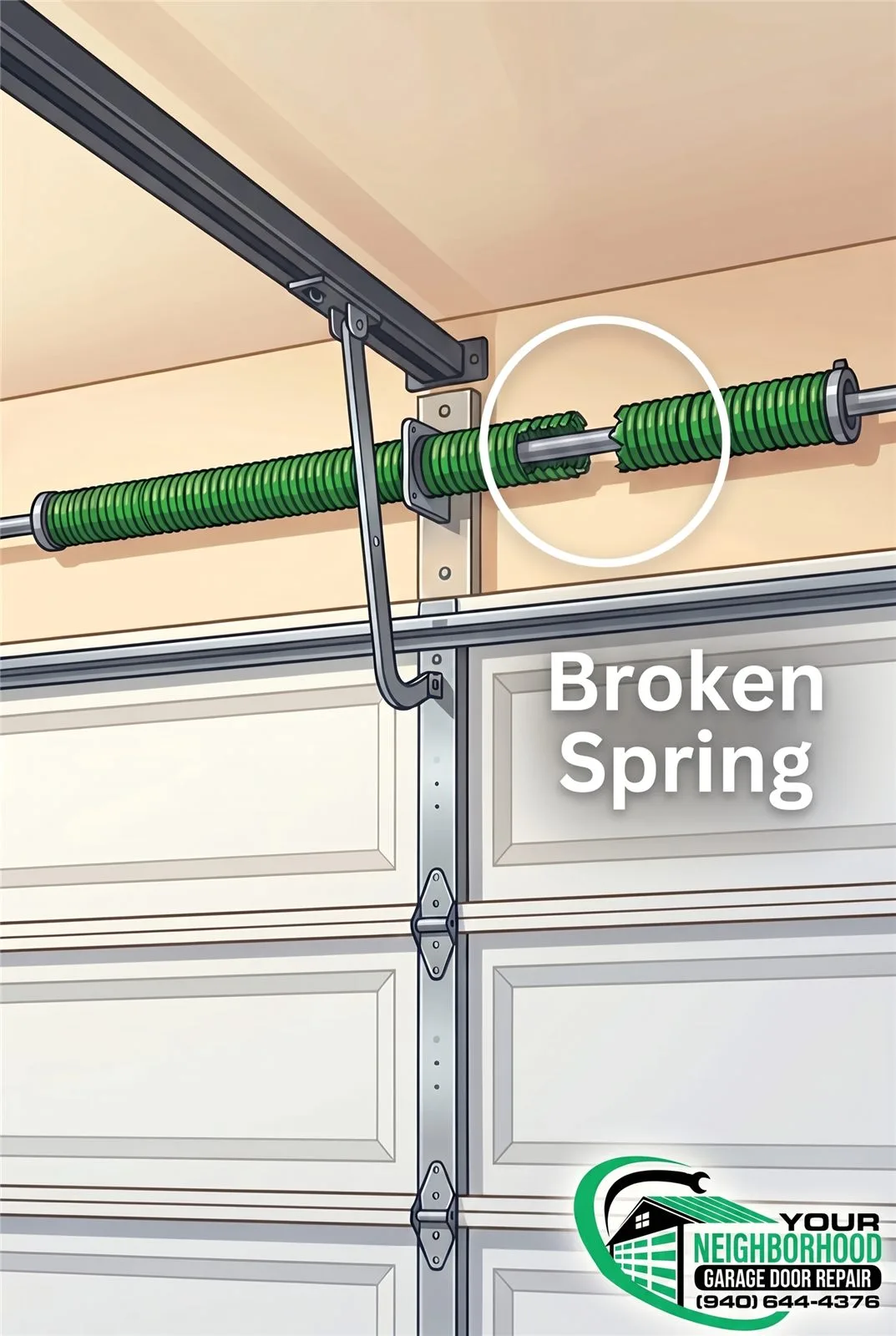
A broken spring isn't just an inconvenience – it can leave you completely locked out of your garage. Our techs carry replacement springs on every truck and fix most jobs in under 60 minutes.
Most Repairs
Torsion & Extension
Cycle-Rated Springs
Labor Warranty
Springs are under extreme tension – they are the most dangerous garage door component to handle yourself. Our licensed techs have replaced hundreds of torsion and extension springs across DFW. We use commercial-grade, high-cycle springs rated for 20,000+ cycles so you get years of reliable service.
When one spring breaks, we always inspect both (or all) springs and advise if the partner spring is near end of life. Replacing both at once saves you a second service call and keeps your door balanced.
Not all garage door springs are created equal. The type on your door affects how it feels to operate, how long it lasts, and what a replacement costs. Here’s a plain-language breakdown of both.
Torsion springs mount horizontally on a steel shaft directly above the door opening. When the door closes, the spring winds up and stores energy under tension. When the door opens, it unwinds — using that stored energy to counterbalance the door’s weight so the opener does very little actual lifting.
Most homes built in the last 20 years use torsion springs. Double-car doors typically run on two springs side-by-side on the same shaft. When one breaks, the door will feel noticeably heavy or may only open partway before the opener trips its safety clutch.
Extension springs run along the horizontal overhead tracks on each side of the door — one spring per side. They stretch as the door closes and contract as it opens, using the energy stored in the stretch to help lift the door through cables and pulleys.
Extension springs are common on older homes and lighter single-car doors. They work well but have a shorter rated lifespan than torsion springs and require safety cables to contain a break. Without safety cables, a snapped extension spring can travel across the garage at high speed.
Not sure which type you have? Just call us and describe what you see above your door. We’ll identify it over the phone and send a tech with the right replacement spring already on the truck — no waiting on parts to be ordered.
Springs wear out gradually then fail suddenly — often with a loud bang. Watch for these warning signs before your door stops working entirely.
The most common cause is simply age and cycles. Builder-grade springs are rated for about 10,000 open/close cycles — roughly 7 to 9 years at average use. In DFW, summer heat and the occasional hard freeze accelerate that wear: metal expands and contracts with every major temperature swing, fatiguing the coils over time. A quick spray of garage door lubricant on the spring coils a couple of times a year can meaningfully extend spring life and takes only a few minutes.
Some warning signs appear gradually — a door that once opened smoothly now shudders slightly, or the opener seems to work harder than it used to. Others are sudden and unmistakable. Catching the signs early is the difference between scheduling a repair on your terms and making an emergency call when your door won’t budge. Here’s what to watch for:
A sudden loud bang or crack – often described as a gunshot – is the classic sound of a torsion spring snapping.
Springs counterbalance your door's weight. A broken spring makes the door too heavy for the opener motor to lift.
If one spring fails on a two-spring system, the door will lift at an angle and may come off track.
Broken torsion springs let the lifting cables go slack, causing them to unspool off the drum.
A gap of 2–4 inches visible in the coil of a torsion spring means it has snapped and needs immediate replacement.
We’ve refined this process over hundreds of spring jobs across DFW. Every step is deliberate — because with springs under this much tension, there’s no room for shortcuts or guesswork. You’ll know exactly what we’re doing and why at every stage.
No surprises, no runaround — just honest work from neighbors who care.
We examine the broken spring, cables, drums, winding cones, and all related hardware. A thorough inspection upfront means we catch anything else near failure — like a fraying cable or a drum starting to slip — before it becomes your next emergency call.
You get a clear, all-in price before we touch a thing. No hidden fees, no add-ons at the end. Say yes or say no — zero pressure either way. The number we quote is the number you pay.
Our techs use calibrated winding bars specific to your spring’s wire size and cone dimensions — never improvised tools. Every step follows safety procedures designed to keep the spring’s tension under control throughout the entire removal process.
We install commercial-grade, high-cycle replacement springs sized and tensioned to your door’s exact weight. Getting the tension right matters: a spring that’s off puts uneven stress on your opener, cables, and drums — shortening everything it touches.
We test the door through several full cycles, verify the balance point (a well-balanced door holds itself still at mid-height without drifting), and walk you through everything we found and fixed — plain English, no jargon — before we leave.
We get this question all the time, and our honest answer is always the same: please don’t attempt it. Replacing a garage door spring is not like changing a light bulb or fixing a leaky faucet. It is one of the most dangerous repairs a homeowner can attempt, and people get seriously hurt doing it every year.
Here’s the reason: torsion springs are wound under enormous tension. A standard residential torsion spring holds hundreds of foot-pounds of stored energy when fully wound. If that energy releases suddenly and without control — because a winding bar slips, the spring snaps mid-winding, or you’ve used the wrong tool — the result is immediate and severe. There are no second chances when it goes wrong at that speed.
Winding bars are required — improvised tools break. The tutorials online show winding bars most homeowners don’t own. Using a screwdriver, rebar, or any substitute is exactly how accidents happen. Correct winding bars are specific to your spring’s wire size and cone dimensions.
The spring must match your door’s exact weight. Installing a spring that’s too light or too heavy puts unbalanced stress on your opener motor, cables, and drums. Over time it causes premature failure of every component the wrong spring is straining — costing far more than the original repair would have.
Cable and drum setup must be precise. A spring job isn’t just the spring — it involves resetting cables on the drum in the right groove and re-tensioning to the correct number of turns for your door’s specific weight. An off-by-one error on a heavy door creates a real balance problem that strains everything.
Insurance may not cover DIY-caused damage. Many home insurance policies exclude mechanical damage caused by unprofessional repairs. If an improperly tensioned spring damages your opener, vehicle, or garage structure, those repair costs may fall entirely on you.
Our techs replace garage door springs across DFW every single day. They carry the correct winding bars, use calibrated springs matched to your door’s exact weight, and follow safety protocols that protect both the technician and your family. The job takes 45–90 minutes and costs a fraction of what an ER visit or a damaged opener replacement would run you.
Let us handle it safely. Same-day service is available throughout the DFW Metroplex — fast, honest, and no runaround.
Call (940) 644-4376 We’ll Be There TodayStraight answers – no tech-speak, no fluff.
Most spring replacements in DFW run $150–$350 depending on spring type (torsion vs. extension), door size, and whether we replace one or both springs. Torsion springs on heavier doors cost a bit more, but the difference is modest. We quote you the exact price upfront before touching anything — no hidden fees, no surprises at the end.
Most spring replacements take 45–90 minutes from the time we arrive. We stock torsion and extension springs in all standard sizes on every truck, so there is no waiting on parts to be ordered. We finish by testing the door through full travel and tuning the balance before we leave — same-day completion is the norm, not the exception.
Torsion springs mount horizontally above the door opening and twist (wind/unwind) as the door moves — they are more durable, quieter, and safer than the alternative. Extension springs stretch along the horizontal overhead tracks on each side of the door. Most doors built in the last 20 years use torsion springs; older or lighter doors may use extension springs. We service and replace both types on any make or model.
We strongly advise against it. Garage door springs store extreme tension — a torsion spring on a standard door holds enough stored energy to cause severe injury or death if released without the proper winding bars and technique. This is the one repair on a home that carries real risk of catastrophic injury. Our licensed techs do this with the right tools and safety procedures every single day. Please call us instead.
Standard builder-grade springs last about 7–9 years or 10,000 open/close cycles. We install high-cycle springs rated for 20,000+ cycles — roughly double the lifespan. At two door uses per day, that works out to 27+ years of service. Paying a little more for high-cycle springs upfront is almost always worth it.
Yes — same-day spring repair is available throughout most of the DFW Metroplex. We carry torsion and extension springs in all standard sizes on every truck, so we almost never need to order parts before coming out. Call us in the morning and most repairs are completed the same day. We also offer evening and weekend appointments for situations where a weekday morning doesn't work.
Don't let a broken spring ruin your day. One call and we'll have a friendly, licensed tech headed your way – fast, honest, and no runaround.