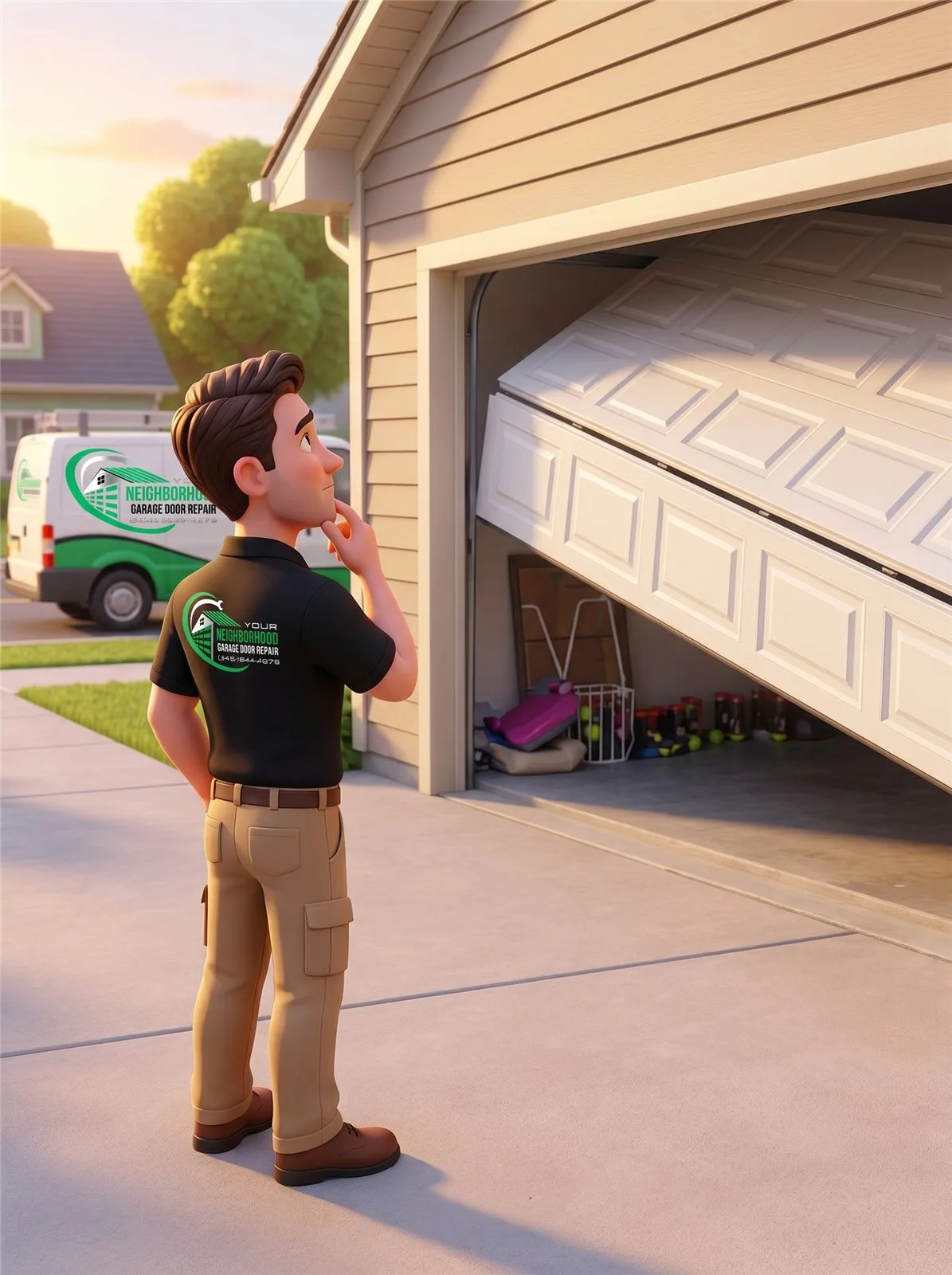
An off-track garage door is a serious safety hazard. Forcing it can bend tracks, strip cables, and damage the door beyond repair. Call us now and we'll get you back on track safely – usually same day.
Emergency Service
Most Repairs
Safety Inspection
Labor Warranty
When a garage door comes off its tracks, it's often a symptom of a larger issue – a broken cable, bent track, worn roller, or vehicle impact. Simply forcing it back can cause serious injury and additional damage. We identify the root cause, fix it properly, and get your door moving safely again.
Our techs carry rollers, track hardware, and cable components on every truck. Most off-track repairs are resolved in a single visit – no waiting on parts, no second trips, no runaround.
An off-track door is almost never random. Something caused it — and fixing the symptom without finding the root cause means it will happen again. Here are the five most common causes we see across DFW.
The most common cause. Lifting cables run from the bottom corners of the door up to the drums above. When one snaps, the door instantly loses balanced support on that side and can slide sideways, jumping the rollers out of the track. Slack cables hanging by the side of the door are a clear indicator.
Rollers have a wheel that rides inside the track channel. Over time they crack, flatten, or break entirely. A worn roller can’t stay in the track under the door’s weight, especially during fast cycles. Nylon rollers are quieter but wear faster; steel rollers last longer but are louder. Either type will eventually fail without periodic inspection.
Track can be bent by a car bumping it, a falling item, or gradual loosening of the mounting brackets. Even a half-inch kink or gap in the track channel is enough to derail a roller as the door passes through. Misaligned tracks are also caused by the mounting bolts slowly backing out over years of vibration.
Even a slow bump against the door can bend a bottom section, knock a roller loose, or misalign the entire track. What’s tricky is that vehicle impact damage doesn’t always cause an immediate off-track failure — sometimes the door operates normally for weeks before the compromised roller or bent panel finally causes a derailment.
Bottom brackets connect the door’s lower corners to the lifting cables and hold the bottom rollers in position. These brackets are under significant cable tension at all times. When a bracket bends or breaks, the cable loses its attachment point, goes slack, and the door loses balanced support on that side — leading directly to a derailment.
Whatever the cause, our tech will find it and fix it — not just re-seat the door and leave. We don’t consider the job done until we know it won’t come off track again.
An off-track door is usually obvious — but here’s what to look and listen for:
One important note: if you suspect your door is off-track, stop using it immediately. Do not run the opener. Continuing to operate an off-track door can twist and crack the panels, damage the opener's gear system, worsen a bent track, or cause the door to fall suddenly. The car can wait — your safety can’t.
Some off-track conditions are dramatic and impossible to miss. Others are subtle — the door works but feels rough or sounds different. Any unusual behavior is worth having a tech look at, because catching a root cause early (like a worn roller or a loose track bracket) is far cheaper than dealing with a full derailment later. Here’s what to watch for:
One side of the door higher than the other, or the door clearly not sitting in its tracks, is a definitive sign of an off-track condition.
A door stuck in mid-travel – especially after a loud noise – has likely jumped a track and jammed against the opening.
Metal roller grinding on the edge of the track instead of rolling inside it creates a distinctive, getting-worse sound.
If you can see a roller sticking out from the side of the track, the door is off. Stop using it immediately.
An uneven gap around the door when closed – especially after operating it – can indicate one side has come off the track.
We approach every off-track repair the same way: diagnose first, fix the root cause, then re-seat the door. Putting the door back on the track without understanding what caused the derailment is just setting the homeowner up for a repeat call.
No surprises, no runaround — just honest work from neighbors who care.
The most important step: do not force the door. Disconnect the opener if it's still trying to run.
We examine the entire track system, rollers, cables, and drum for damage and identify the root cause.
Whether it's a broken cable, bent track, or worn roller – we fix the cause before putting the door back on track.
Track is re-straightened and secured, door is carefully re-seated on the rollers in proper travel position.
Door is cycled through full travel, auto-reverse tested, and all hardware torqued to spec before we leave.
The instinct is understandable — the door is stuck, and it looks like it just needs a little push to pop back into place. Please don’t. An off-track garage door is not in a predictable state. Springs may still be partially loaded, cables may be slack on one side, and the panels may be twisted in ways that aren’t visible from a normal viewing angle. Moving the door manually in this condition can cause it to drop suddenly, and a garage door weighs 150–300 pounds.
Running the opener is even more dangerous. The motor will keep trying to drive the door even as the rollers are grinding against the edges, the panels are buckling, or one side is moving while the other isn’t. The opener doesn’t know the door is off-track — it only knows the door hasn’t reached the open or closed position yet, so it keeps trying. This can destroy the opener’s gear or chain system and cause additional structural damage to the door in minutes.
With spring tension involved, manually forcing an off-track door can cause it to suddenly drop or swing in an unexpected direction. The weight of a garage door can cause severe injury.
Running the opener on an off-track door will grind rollers against the track edges, buckle panels, and can burn out or strip the opener’s drive mechanism — turning a $200 repair into a $600 one.
Off-track repair is fast for a trained tech — typically 1–2 hours. If your door is stuck open and it’s a security concern, we offer emergency service around the clock throughout DFW.
Door off-track and stuck? We’ll get there fast — same-day service throughout the DFW Metroplex.
Call (940) 644-4376 Emergency Service AvailableStraight answers – no tech-speak, no fluff.
Yes – a door off its tracks can fall suddenly if disturbed, especially a heavy steel door. Until repaired, treat the door as a safety hazard: don't use it, don't walk under it, and if it's stuck open, call us for emergency service.
Common causes include: broken cable (sudden loss of support on one side), vehicle impact, worn or broken rollers that can no longer grip the track, bent or misaligned tracks, and loose or broken bottom brackets.
We strongly advise against it. Without proper tools and knowledge of spring tension and cable management, attempting to re-seat an off-track door can cause serious injury and additional damage. Call us – it's a fast job for a trained tech.
Most off-track repairs run $100–$350 depending on what caused the derailment and what additional parts are needed. We give you a full quote before starting.
Straightforward cases take 1–2 hours. If the root cause involves cable or spring replacement, it may take a bit longer – but most are completed in a single visit.
Don't leave your garage open or your car trapped. Call your neighbor – emergency service available 24/7 across the entire DFW Metroplex.